
How do you get a rural tourism license in Catalonia?
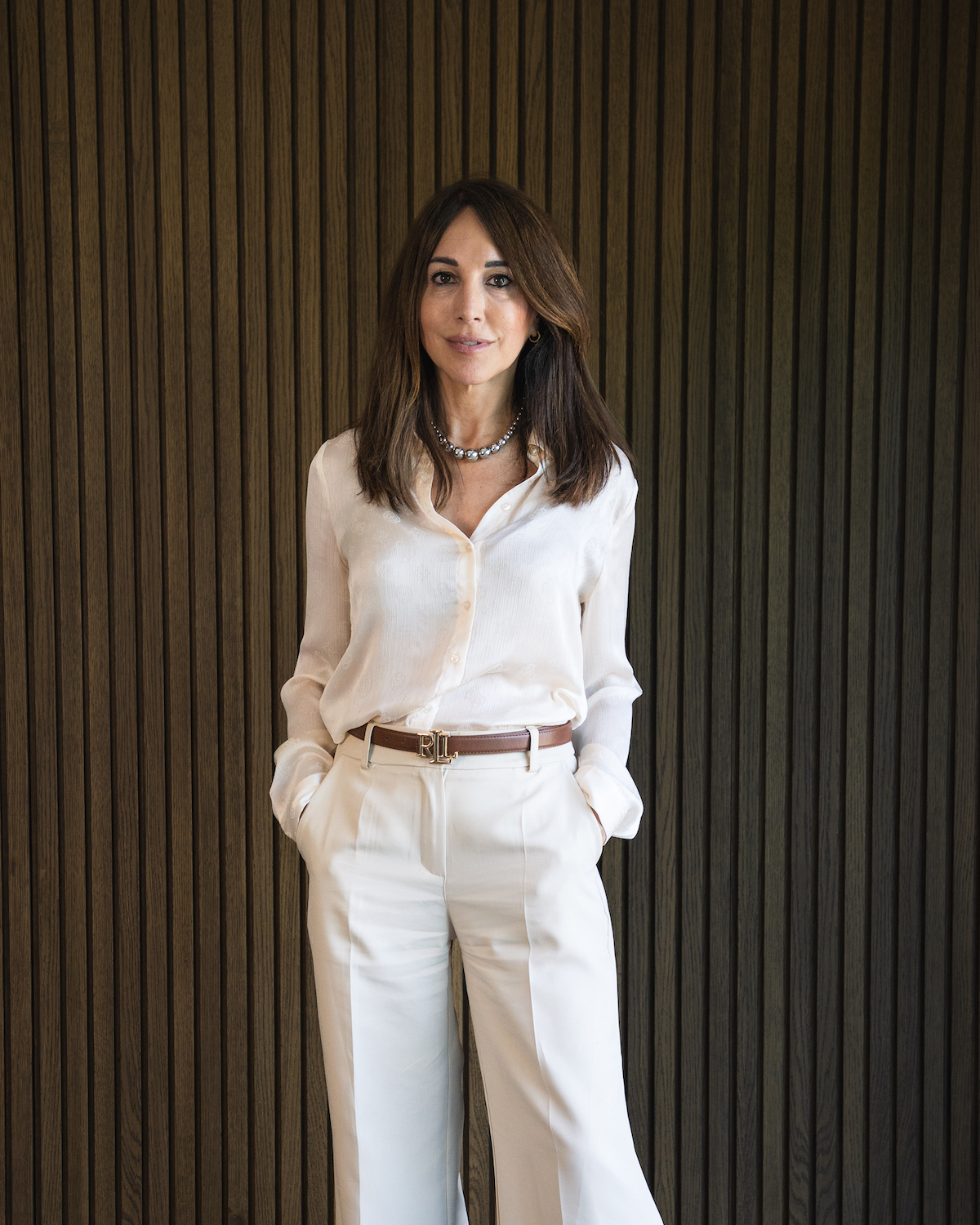
Àngels Sabater Anell
Àngels Sabater Anell is the director of Cottage Properties and a registered estate agent with AICAT (agent no. A12323). She joined the agency in 2016 and took over as director in 2021.
As long as your country house or masia has a valid habitability certificate (cèdula d’habitabilitat), you can apply for a rural tourism license and legally rent it out to guests. The process is more straightforward than most people expect – but there are rules and requirements worth understanding before you buy or apply.
In this article you’ll learn:
The difference between a rural tourism license, a hotel license and tourist accommodation – and why one almost always makes more sense for a masia or country house buyer
The exact requirements your property needs to meet
How to apply for the license step by step
Whether you can transfer an existing license when you buy a property
What activities you can legally run alongside your rural tourism business
Browse our current listings of country houses for sale in Catalonia and masias for sale in Catalonia. If you'd like to know whether a specific property has rural tourism potential, contact us directly.
Hotel license, rural tourism license or tourist accommodation: what’s the difference?
In my experience working with buyers of country houses and masias across Catalonia, this is the question that causes the most confusion.
People often arrive thinking they need to choose between a hotel license and a rural tourism license – or they’ve heard about tourist accommodation (habitatge d'ús turístic) and aren’t sure where that fits.
The reality is that for almost every country house or masia buyer we work with at Cottage Properties, a rural tourism license is the right choice.
Let me explain why.
A hotel license allows you to accommodate a larger number of guests with no upper cap on capacity. That sounds attractive. However, the regulatory requirements are extremely demanding – you need fire doors and full suppression systems in every room and common area, disabled access or a lift, specific ratios of room size to bathroom space and a dedicated reception area. If your masia has original wooden beams, those beams must be clad in fire-resistant materials.
For most historic masias, meeting these standards would require a costly renovation that is often structurally impossible. And even if you could afford it, many listed properties in the Catàleg de masies i cases rurals cannot be granted permission for the structural changes required.
A tourist accommodation license (habitatge d'ús turístic, or HUT) is designed for urban properties – an apartment or house rented out in its entirety for short stays. It’s not designed for rural properties and does not allow you to run the kind of hospitality business most country house buyers have in mind.
The rural tourism license is built exactly for properties like the masias and country houses we sell. It comes with manageable requirements, and it gives you the flexibility to live in your property while running a business from it.
It also opens the door to a far wider range of income-generating activities than most people realise.
In Regencós, in the heart of the Baix Empordà – what locals call the ‘golden triangle’ – there are just a handful of rural tourism properties serving a popular area close to beaches like Calella de Palafrugell.
The property we sold there has a fascinating history – it served as a military headquarters during the Carlist Wars – and TV3 covered the sale as part of a feature on the growing interest among international buyers in Girona’s rural tourism market.
That kind of scarcity in a sought-after location is exactly what a rural tourism license can unlock.
The table below summarises the key differences between the three license types:
| Factor | Rural tourism license | Hotel license | Tourist accommodation (HUT) |
| Can you live in the property? | Yes | No | No |
| Maximum capacity | 20 places | No cap | 15 places |
| Ease of obtaining | Straightforward | Very difficult | Straightforward |
| Strictness of regulations | Moderate | Very strict | Moderate |
| Fire safety requirements | Standard | Sprinklers, fire doors, full suppression systems | Standard |
| Disabled access required | No | Yes | No |
| Can you list on Airbnb/ Booking.com? | Yes | Yes | Yes |
| Restaurant open to public? | No, guests only | Yes | No |
| Retreats and workshops allowed? | Yes | Yes | No |
| Suitable for rural masias and country houses? | Yes | Rarely | No |
Source: Decret 75/2020 de turisme de Catalunya
1. What types of rural tourism establishments are there in Catalonia?
Under Decret 75/2020, rural tourism establishments in Catalonia are divided into two main groups, each with four modalities:
The first group is cases de pagès – agroturism establishments – where the owner earns income from agricultural, livestock or forestry activity and guests can participate in the working farm experience.
The second group is allotjaments rurals, where the owner does not need to have any agricultural income. This is the group most country house and masia buyers in Catalonia will fall into.
Within each group, there are four modalities:
A masia is a standalone farmhouse outside a village, where the owner lives on site and rents out rooms – breakfast must be included as a minimum.
A masoveria is also outside a village but is rented as a whole property rather than by the room.
A casa de poble compartida is a village house where the owner lives on site and rents out rooms.
A casa de poble independent is a village house rented out as a whole property.
The modality you choose affects your residency obligations.
If you run a masia or casa de poble compartida, you must be registered (empadronat) and actually living at the property. For a masoveria or casa de poble independent, you must be registered as resident in the same comarca or a neighbouring municipality – you do not have to be on site day to day.
One property type that cannot qualify under any circumstances: flats or apartments in multi-storey buildings under horizontal property rules.
Rural tourism licenses are for standalone rural buildings only.
2. What are the requirements to get a rural tourism license in Catalonia?
Your property must meet a set of conditions before you can apply – some are about the building itself, others are about you as the owner:
The building must pre-date 1957: Rural tourism establishments must be integrated into existing buildings constructed before 1957 that respect the architectural character of the area. They must be situated in a rural setting – either isolated or in a village of fewer than 2,000 inhabitants.
You need a valid habitability certificate: The cèdula d’habitabilitat is the single most important document. Without it, you cannot apply. If your property does not have one, you will need to obtain it before proceeding – and that process may require renovation work to bring the property up to the required standard.
The building must meet minimum space requirements: Under Annex 5 of Decret 75/2020, individual bedrooms must be at least 8m², double rooms at least 12m², triple rooms at least 14m² and quadruple rooms at least 16m². Every bedroom must have direct ventilation to the outside. Bathrooms must be at least 2.5m² with a bath or shower, washbasin and toilet. There must be a living room of at least 18m² for up to six guests, increasing by 1m² per additional guest. All rooms except bathrooms must have a minimum ceiling height of 2.5m – though properties of historic or architectural interest may be granted an exception.
You need a liability insurance policy: This is a legal requirement and covers you for any damage or injury to guests.
You need a 24-hour contact number: You must provide guests with a phone number they can reach at any time.
Your property must be registered with the Registre de Turisme de Catalunya: Once your application is processed, your property will be assigned a NIRTC (Número d'Inscripció al Registre de Turisme de Catalunya). This number must appear on all advertising — including your listings on Airbnb and Booking.com.
You must check your municipality’s position first: Some areas, particularly around Barcelona, have stopped issuing new licenses due to saturation, under Decree-Law 3/2023. In most of rural Girona and the Empordà, licenses are still being granted. Always verify with your local council before committing to a purchase. At Cottage Properties, we do this as a standard part of our due diligence on every property.
A word of warning: always do your due diligence.
Not every property that looks like a masia is legally ready for a rural tourism license. I learned this first-hand when working on a sale that ultimately could not proceed as a residential property at all.
During due diligence, I discovered that the property did not have a legally registered access road. Without one, the property could not obtain a habitability certificate – which meant no rural tourism license was possible.
In fact, the property should not have been listed as a house for sale at all. It was legally an agricultural plot with a ruin on it, not a habitable dwelling.
Another agency might have pushed the sale through regardless – we did not.
That kind of thorough due diligence is one of the most important things that sets a specialist rural property agency apart from a generalist one. It protects buyers from an extremely costly mistake.
Here's a real example of how location-specific rules can add complexity:
When I sold Mas dels Arbres in Cadaqués, the property sat within a national park. Rehabilitation had to use exclusively local materials and meet strict environmental standards – a significantly more complex process than a standard rural property in a less protected area.
The result was spectacular, and the property became one of only two rural accommodation options in the Cadaqués and Roses area. Canal Decasa featured the project, interviewing me about restoring a property under national park restrictions.
The lesson: the rules vary significantly by location, and knowing what applies to your specific property before you buy is essential.
3. How do you apply for a rural tourism license in Catalonia?
The application process is simpler than most people expect.
You do not need to wait for a formal authorisation before you can begin operating. Instead, the system works through a declaració responsable – a responsible declaration that you meet all the requirements.
First, check with your local council (ajuntament) that your municipality is still issuing new rural tourism licenses. This is the most important step, and it is one we always help buyers verify before they commit to a purchase.
Second, prepare your documentation. You will need your DNI, NIE or NIF as the owner, the title deed (títol de propietat), and your valid habitability certificate.
Third, submit your declaració responsable to the ajuntament – either in person or online. At the point of submission, you receive a provisional number that you can use in your advertising while the registration is processed.
Fourth, the ajuntament communicates the registration to the Registre de Turisme de Catalunya, which assigns your permanent NIRTC. This number must appear on all your listings and advertising.
Fifth, register with the tax authority as a self-employed person (autònom) under activity code CNAE 5520 and set up your quarterly VAT and income tax declarations. If you are managing the property yourself, you also need to register with the RETA (the self-employed social security regime). A good gestor is worth their fee here.
Finally, register with the Mossos d'Esquadra (Catalonia police) for guest registration. You have a legal obligation to record every guest’s identity documents and submit their details to the Dirección General de la Policía within 24 hours of arrival.
4. Can you transfer a rural tourism license when buying a property?
Yes, and this is one of the most practical advantages of buying a property that already has a license in place.
When you purchase a property with an active rural tourism license, all you need to do is carry out a change of name (canvi de nom) at the local council. It is a straightforward process – similar to transferring the registration of a second-hand car. The license stays active, it simply moves into your name.
This is significantly easier than applying from scratch, particularly in municipalities where demand is high and new applications are scrutinised more carefully. If you are buying a property specifically to run as a rural tourism business, buying one that already holds a license removes one of the key steps – and one of the key uncertainties – from the process.
At Cottage Properties, we always check the license status of a property as part of our due diligence and we accompany buyers through the transfer process.
5. How many guests can you accommodate with a rural tourism license?
The maximum capacity under a rural tourism license in Catalonia is 20 places. This is not 20 rooms – it’s 20 people in total, distributed across however many bedrooms your property has.
Individual bedrooms count as one place, double rooms as two, triple rooms as three and quadruple rooms as four. No single room can accommodate more than four people.
If your property is a masia or casa de poble compartida, the minimum capacity is one room and two places. If it is a masoveria or casa de poble independent, the minimum is two rooms with at least two places each.
The 20-place cap is a firm legal limit – and it is the reason you cannot hold events at your property that bring more people onto the premises than your licensed capacity.
This catches out a number of owners who were told by a previous owner that they had been routinely hosting larger groups for years – what was informally tolerated is not the same as what is legal.
I have dealt with exactly this situation: a buyer received a property with a license showing 20 places and discovered the previous owner had been advertising capacity for 30 to 40 people. That discrepancy created serious problems in the sale.
One more important rule: if a single building contains more than one rural tourism establishment – whether under the same owner or different owners – the combined total still cannot exceed 20 places.
6. Can you live in your property while renting it out?
Yes, and this is one of the most significant advantages of a rural tourism license over a hotel license.
Under the rural tourism framework, you’re renting out your home. The regulations explicitly permit you to live in the property while operating it as an accommodation business. This is the model most of our buyers at Cottage Properties have in mind – a property where they live and also generate income from guests.
Here's a real example:
I sold this property near Banyoles to a couple who wanted exactly this setup.
The property came ready to move into, with four separate self-contained apartments and a horse stables. The couple could live in one part of the property while renting out the apartments independently.
Only a rural tourism license makes this possible – a hotel license would have prohibited the owners from using the property as their primary residence.
The residency rules do vary slightly by modality:
For a masia or casa de poble compartida, you must be registered and actually living at the property.
For a masoveria or casa de poble independent, you need to be registered as resident in the same comarca or a neighbouring municipality – you do not have to live on site.
7. What activities can you run alongside a rural tourism license?
This is where a rural tourism license becomes genuinely exciting for buyers with an entrepreneurial mindset.
Under Decret 75/2020, rural tourism establishments are explicitly compatible with other service activities carried out on the same property – subject to the relevant planning and sectoral regulations.
In plain terms – you can run workshops, retreats, yoga courses, cookery classes, wine tastings, horse riding, guided walks and a wide range of other activities from your property, as long as each individual activity complies with its own relevant requirements.
Around 80% of the international buyers we work with at Cottage Properties are interested in the rural tourism license partly because of this flexibility.
It transforms a beautiful property into a genuinely viable business with multiple income streams.
Here's a real example:
When I sold Can Morgat on the banks of Lake Banyoles to a Belgian-Czech couple, the property was already well known locally – tied to a local legend and one of the landmark buildings on the lake.
The couple’s plan was to obtain the rural tourism license, rent out the property and run workshops once the renovation was complete. TV3, Catalonia's main television channel, interviewed the couple and me about the purchase and their vision – you can read the write-up here.
Here's another real example:
I also helped a French couple purchase this farmhouse in Celrà. Their goal was to combine rural accommodation with a programme of aerial silks workshops – a discipline in which they were both professionally trained. The rural tourism license made both possible from the same property.
There is one important limit to keep in mind – you cannot use your property to host events or social gatherings that bring more people onto the premises than your licensed capacity.
The 20-place cap applies to any activity where people are present on the property – not just overnight guests.
8. Can you run a restaurant with a rural tourism license?
Not in the way most people mean when they ask this question.
Under a rural tourism license in Catalonia, you’re permitted to serve food to your guests. Breakfast is a requirement in the masia and casa de poble compartida modalities and you can offer dinner – the regulations specify home cooking from the local area. But all food service must be directed exclusively to the people who are staying at your property – you cannot open your dining room to members of the public, day visitors or locals from the surrounding village.
This is a firm rule.
I have encountered situations where a previous owner had been informally feeding people from outside for years. It’s the kind of arrangement that a small community might turn a blind eye to – but it’s not legal and if an inspection occurs or an incident happens, the consequences can be serious.
If you want to run a restaurant open to the public, that requires a separate license and is not compatible with a rural tourism establishment in the same building.
The one narrow exception under the decree is for rural tourism properties in the casa de poble modality located in villages of fewer than 30 inhabitants, where a restaurant of up to 30 covers may be permitted.
This is a very specific circumstance.
The practical takeaway: The rural tourism license gives you a fully functioning hospitality business with real income potential. It just keeps the focus on the guests who are staying with you.
Browse country houses and masias for sale in Catalonia
If you are considering buying a property in Catalonia with rural tourism potential, the best place to start is with the right property – and the right agent.
I have been co-director of Cottage Properties since 2016, working exclusively with country houses and masias across Catalonia. I know which areas are still issuing new licenses, which properties already have licenses in place and what questions to ask during due diligence to make sure you are not buying into a problem.
As a registered real estate agent in Catalonia, I work directly with international buyers throughout the entire process.
Browse our current listings of country houses for sale in Catalonia and masias for sale in Catalonia.
If you see a property you are interested in, contact us and I can tell you whether it has rural tourism potential – and walk you through what the process would look like for that specific property.
Frequently asked questions
How long does a rural tourism license last in Catalonia?
A rural tourism license in Catalonia does not expire automatically. Once granted and registered with the Registre de Turisme de Catalunya, it remains valid as long as the property continues to meet the required conditions and the owner maintains their legal obligations.
If you buy a property with an existing license, a simple change of name at the local council transfers it into your name.
What happens if you operate without a rural tourism license?
Operating a rural tourism property without a license is a serious infraction under Catalan tourism law. Fines range from €30,000 for minor infractions up to €600,000 for the most serious cases.
The local council can also order the immediate closure of the property as a tourism establishment. Platforms like Airbnb and Booking.com are legally required to display your NIRTC registration number – without it, you cannot legally advertise on these platforms.
Can you list your property on Airbnb or Booking.com?
Yes, once you have your NIRTC registration number, you can list your property on any platform – Airbnb, Booking.com, your own website or anywhere else – your NIRTC must be displayed on every listing.
If you have submitted your application but are still waiting for your permanent NIRTC, you can use the provisional number issued at the point of submission in the meantime.
Do you need to register guests with the police?
Yes, you’re legally required to record the identity documents of every guest and submit their details to the Dirección General de la Policía within 24 hours of arrival. This applies to all guests.
Most property management software includes this functionality, and your gestoria can advise you on the most practical approach.
Is there a tourist tax to collect from guests?
Yes, Catalonia charges an Impost sobre les estades en establiments Turístics (IEET) – a tourist tax – which you must collect from guests and pay to the tax authority on their behalf.
The rate varies depending on the type of establishment and the time of year. Rates were increased in 2025 – your gestor will handle the quarterly declarations.
Are rural tourism licenses available everywhere in Catalonia?
Not always – areas close to Barcelona and some heavily touristed municipalities have restricted or paused new licenses under Decree-Law 3/2023, which affects 262 municipalities with high housing pressure.
In much of rural Girona and the Empordà, licenses are still being issued without significant obstacles. Always verify with the local council before buying a property specifically for rural tourism purposes. At Cottage Properties, we check this as a standard part of our due diligence on every property.
How much does it cost to get a rural tourism license in Catalonia?
The registration itself does not carry a fee from the Generalitat – the process is free.
However, you will incur associated costs: renewing your habitability certificate if it has expired (typically €300 to €600 depending on the property and the technician), a liability insurance policy (costs vary by property size and capacity), municipal processing fees (these vary by ajuntament) and professional fees if you use a gestor or lawyer to manage the application.
The most significant costs are usually those associated with bringing the property up to the minimum requirements before applying, rather than the application process itself.
Post published 15/06/2026