Legal due diligence for purchasing a country house in Catalonia without surprises
Cottage Properties verifies the legal status of each masia and rural property before accepting it into our portfolio. The process includes registry, cadastral, planning and heritage checks – including verification in the catàleg de masies i cases rurals. We only work with catalogued properties. With over 700 transactions in Catalonia since 2003, our team of agents, architects and solicitors identifies irregularities before they become problems for the buyer.
What legal checks do we carry out before accepting a property?
Cottage Properties does not list any property without verifying its legal status. These are the checks we carry out before a masia or rural property enters our portfolio.
-
Title deed, registry entry and charges
Cottage Properties does not list any property without verifying its legal status. These are the checks we carry out before a masia, rural estate or singular property enters our portfolio.
-
Cadastre and land registry
In older masias, the Cadastre and Land Registry rarely match. When we identify a discrepancy, we coordinate a survey by a technical architect, the preparation of a new title deed, notification to neighbouring landowners and re-registration of the property.
-
Planning status and land classification
We review the land classification – most masias are located in sòl no urbanitzable. This classification determines the permitted uses and works that can be carried out. We verify this before the buyer assesses the property's potential.
-
Catàleg de masies i cases rurals
If a masia does not appear in the municipal catalogue, it cannot be legally rehabilitated nor considered a habitable dwelling. The catalogue is closed – no new properties can be added. Cottage Properties only works with catalogued masias.
-
Habitability certificate and energy performance certificate
The habitability certificate confirms that the property meets the minimum habitability conditions required by Catalan regulations – it is mandatory to formalise the sale before a notary. The energy performance certificate is compulsory for any property to be sold or let, in accordance with Royal Decree 390/2021.
-
Unregistered buildings and discrepancies
Agricultural outbuildings, sheds, extensions without registration – irregularities are common in masias. We verify that all buildings are registered and that the actual floor area matches the official documentation. If it does not, we coordinate regularisation prior to the sale.
-
Access tracks, water and utilities
Every rural property requires a legally recognised access track in order to obtain a rehabilitation permit. We verify the existence of access, the connection to the water network or the legalisation of the well, and the availability of electricity.
-
Operating licences
If the property operates as a business – hotel, tourist accommodation, agricultural operation, events venue – we verify the validity and conditions of the relevant licence: hotel licence, registration with the Catalan Tourism Registry, agricultural activity licence or other applicable authorisations.
-
Easements and boundaries
We review rights of way, third-party rights over the property and boundary discrepancies. These are common issues in older rural properties that can halt a sale if discovered too late.
Why the catàleg de masies changes everything
The catàleg de masies i cases rurals is the official register of the Generalitat de Catalunya that identifies all recognised masias and rural houses.
If a masia does not appear in its municipality's catalogue, it cannot be legally rehabilitated. It is not considered a habitable dwelling. If a buyer carries out works on an uncatalogued masia and the authorities discover this, they may receive a demolition order.
Cottage Properties only works with catalogued masias. It is the first check we carry out – and the one that rules out the most transactions.
If you wish to check whether a masia is catalogued, we have published a guide with direct access to the masia catalogues for 417 municipalities in Catalonia.

Legal issues we identified before it was too late
Every rural property has its own history – and it is not always the one the seller tells. These are real cases where our legal checks protected the buyer.
-

A historic country house with registration issues that we resolved to complete the sale
This 17th-century fortified country house in Roses is one of the most iconic buildings in the area, with historical links to pirate protection and Roman remains in its surroundings. But behind its heritage value lay a legally complex transaction.
The property carried several encumbrances and registration discrepancies that needed to be resolved before it could be sold with full guarantees. Added to this was a further complication: as a property with vineyards and agricultural land, the boundaries were unclear and had to be precisely established.
This is where our work proved decisive. We coordinated the georeferencing of the land with a collaborating engineer, using satellite surveying, to accurately define the boundaries of the estate and its cultivated areas. We then resolved, one by one, the encumbrances and discrepancies affecting the property, leaving it ready for the title deed to be signed.
Without that preliminary work, the sale could not have been completed. It is an example of how our legal checks can turn a legally complicated property into a viable transaction.
-
We make a roofless country house sellable in the heart of a natural park
A success story of a legal checks service for farmhouses in Alt Empordà, Girona.
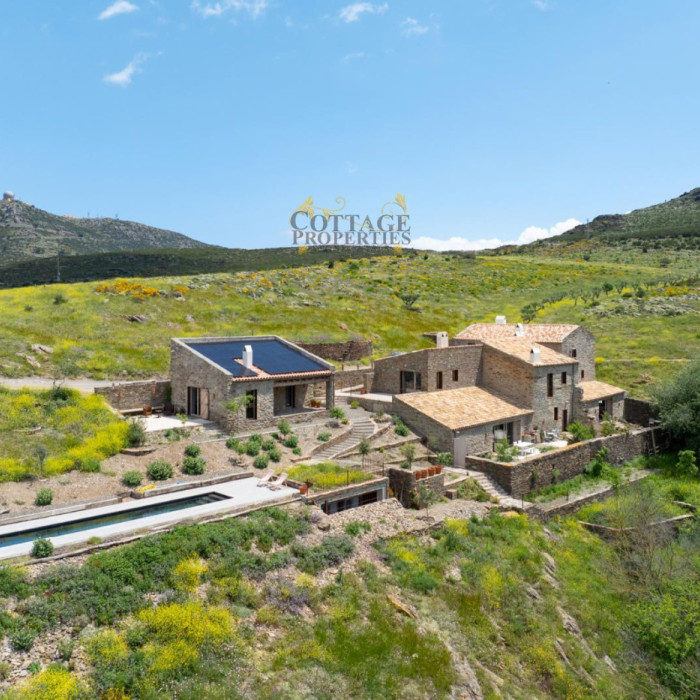
In 2019 we sold Mas dels Arbres, a farmhouse dating from 1750 situated within the Parc Natural del Cap de Creus. At that time it was a ruin: without a roof, used for years as shelter for livestock.
Before we could bring it to market with any guarantees, we took care of putting its situation in order. We coordinated the surveys and measurements, resolved the outstanding land registry entries, and confirmed two decisive points for an isolated property of this nature: its water rights, with its own well, and its electricity supply.
To all of this we added our free rehabilitation proposal. We took into account the local regulations regarding what could be done and how: extending the building was not permitted, and the collapsed walls had to be rebuilt using dry stone technique.
Without that preliminary work, a ruin within a natural park is an extremely high-risk purchase. With it, the sale of a farmhouse in Alt Empordà becomes possible, in one of the most demanding settings in Girona – a natural park.
-
A discrepancy between the land registry and cadastre that prevented the sale of a country house
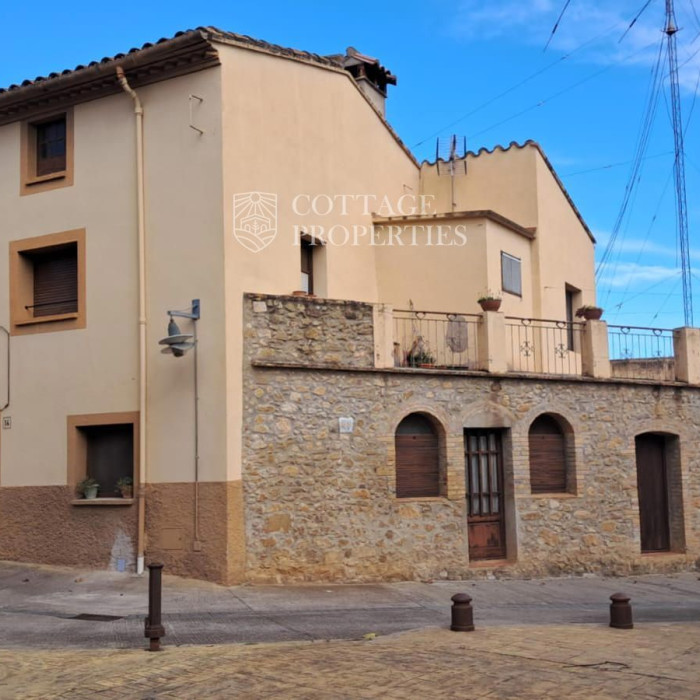
We had everything ready to sell this country house in Maià de Montcal, near Besalú, when we detected a problem: the square metres stated in the deed did not match the actual property dimensions. It was a discrepancy between the land registry and the cadastre, and without resolving it the sale could not proceed. Before a notary, the transaction would have been blocked.
It is a situation more common than it seems, especially with older properties that have never been updated. And it is precisely the type of obstacle that should be detected before putting a house on the market, not after.
We took care of the entire process. We sent a technical surveyor to re-measure the land and the property, we processed a new deed with the correct measurements, we obtained the consent of all the neighbouring owners and we re-registered the property at the land registry.
It worked out well: the property was put in order and the sale was completed. Without that preliminary work, a perfectly sellable house would have remained unable to change hands. It is an example of how our legal checks prevent a land registry issue from derailing a sale.


-
Cottage Properties carries out a thorough review of each property before accepting it into its portfolio. The process includes verification of the registry entry, title deed and charges; checking for discrepancies between the Cadastre and Land Registry; review of land classification and planning status; confirmation of inclusion in the catàleg de masies i cases rurals; verification of the habitability certificate and energy performance certificate; review of unregistered buildings; checks on access tracks, water and utilities; and verification of operating licences and easements. We only list properties that pass this process.
-
The risks range from documentary discrepancies that delay completion before a notary, to issues that invalidate the purchase altogether. An uncatalogued masia cannot be legally rehabilitated – and if works are carried out, the buyer may receive a demolition order. Unregistered buildings, undisclosed easements or the absence of a legal access track can turn an apparently attractive property into an asset with no residential value. The most serious problems are those that are not visible during a viewing.
-
Without any difficulty. If the buyer has their own solicitor, we work directly with their legal team – sharing documentation, due diligence reports and verifications so that both parties are working with the same information. Our in-house property solicitor drafts the reservation contract, but if the buyer prefers their own solicitor to review or draft it, we facilitate the process as intermediaries.
-
Before signing any commitment, the buyer receives the full results of our checks: an up-to-date registry entry, cadastral status, confirmation of cataloguing, planning status, floor area verification and a report on any irregularities identified. If the property requires rehabilitation, our sister company Cottage Architecture can prepare a free cost proposal before the buyer makes any commitment.
-
It cannot be legally rehabilitated. The Generalitat de Catalunya closed the catalogue years ago and no new entries are accepted. A masia outside the catalogue is not considered a habitable dwelling – any works carried out without this cataloguing may result in a demolition order. Cottage Properties does not accept uncatalogued masias into its portfolio. We maintain our own register compiled from the official catalogues of more than 400 local councils in Catalonia.
-
The most frequent are buildings not registered at the Land Registry – agricultural outbuildings, sheds, extensions, workers' cottages. Also common are floor area discrepancies between the Cadastre and the Land Registry, the absence of a habitability certificate, the lack of a legal access track, and unlegalised wells. Cottage Properties verifies each of these points before listing a property – not after finding a buyer.
Would you like to know the legal status of a masia in our portfolio?
All Cottage Properties listings have gone through our legal checks process before being published. If you would like to receive the full details – cataloguing, registry documentation, planning status and utilities – for a property you are interested in, request a consultation with Àngels Sabater.